

Why They’re Not Buying (Even If They Want To)
If you’re building a sustainable or more conscious brand and sales aren’t coming in, even though you know your product’s good, here’s what’s really going on.

You’re not making sales because people aren’t buying your product.
Now, that sounds obvious, but let’s go back a few steps.
Why would someone want to buy your product?
The truth is, many shoppers say they’d like to buy sustainably. They express interest in paying more for eco-friendly goods. But when it comes to clicking Add to Bag and getting their credit card out, their actions don’t match their intent.
So if they want to, then why are they not?!
Because they don’t believe your product is worth what you are selling it for.
And often, it’s not because it isn’t. It’s because they don’t understand why it costs more.
In many cases, your more sustainable product costs more to make, because you’re not using slave labour and you’re also not using cheap plastic to make it. That process takes you longer and you want to charge for it.
But people don’t like to pay more for things when they don’t understand why
Let’s say I’m shopping online and I see two t-shirts: one is £25, the other is £100. I like both designs.
Which one am I choosing?
Unless I’m extremely values-led, extremely informed, and have disposable income, I’m probably going for the £25 one. That doesn’t make me ignorant or unethical. It makes me human.
Even if I am the ideal conscious customer, someone who’s clued up on material sustainability, fast fashion and wants to make better choices, I’ve still got competing priorities. Maybe I’m also buying trainers, a jacket, and a gift for my mum. In that case, I’m still choosing the cheaper t-shirt.
So what needs to align for someone to pay £100 for yours?
They need to understand the difference
They need to value what that difference means
And they need to feel like it’s worth it, to them
That’s a lot of cognitive work to expect from someone scrolling on mobile at 10:42pm.
Unless you position it clearly and quickly, they’re choosing the cheaper one.
And that’s the point. Most customers aren’t going to do deep research on your materials, certifications, or mission, especially not in a split-second shopping moment.
Unless you’re Yvon Chounaird selling hiking gear to outdoorsy people at Patagonia and you’re already preaching to a choir of people who really care about the Earth because they spend their time in nature and ‘leaving no trace’, then your average customer isn’t going to buy from you because of your sustainability.
So what do you do instead?
You need to position your product better.
You’re not selling t-shirt anymore. We’ve established your ideal customer isn’t going to buy from you just because it’s sustainable. Your product can’t just exist on a pretty page. You can’t stop there.
You need to act like that t-shirt’s biggest hypeman and translate that into sales copy and your messaging.
Your customer might buy t-shirt because:
It fits better
It lasts longer
It makes them look cool
It solves a problem your competitors haven’t figured out
So here’s what that looks like in the wild:
You create a product people actually like because it’s better
What sucks about the current options on the market for the category your product fits in? Let’s take the t-shirt example a bit further.
I bought a white vest from Organic Basics and while I loved their brand at first, I hated the quality of the shirt when it arrived. It was so flimsy.
Despite being made of organic cotton, I’d never buy from them again, because it lost any sort of material integrity after a wash. Maybe you market your t-shirt as the most luxurious cotton t-shirt made of organic cotton.
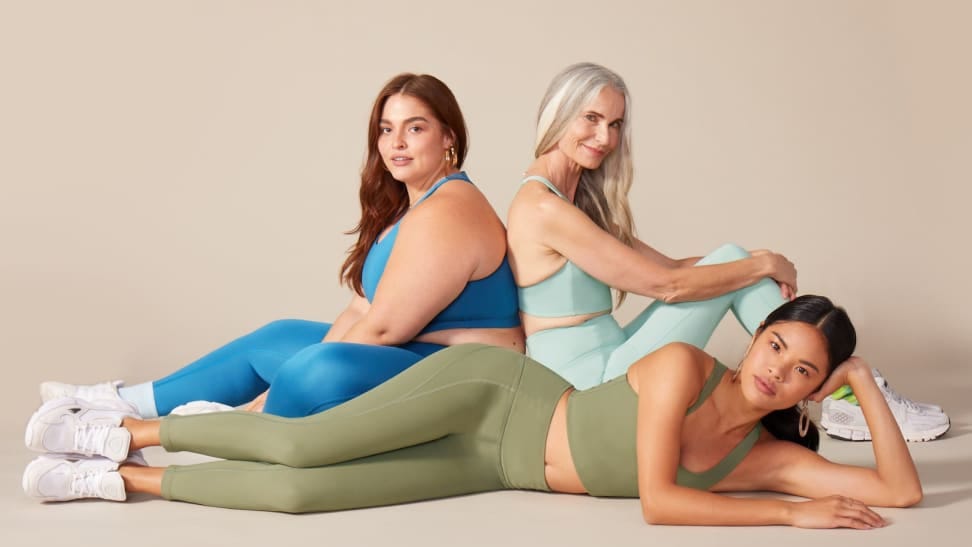
Take inspiration from Girlfriend Collective - the activewear brand. The reason they blew up wasn’t because their activewear is made of recycled plastic bottles. It blew up because they created a compressed material that was still comfortable and breathable.
If it costs more, tell me why and make me care
Like I said earlier, sustainable products often do cost more to make. You’re not using slave labour. You’re not buying materials by the tonne from fossil fuel conglomerates. You’re being intentional about your processes and supply chain.
But your customer doesn’t know that, unless you tell them or they have insane mind-reading skills.
Here’s the truth most founders like yourself don’t want to hear: your customers don’t care unless it benefits them directly.
So what does this mean? No it doesn’t mean you need to resort to greenwashing, but it does mean talking about your story in words that they can resonate with and what matters to them.
As a customer, I don’t really care that you saved 32 million tonnes of CO2. How does that impact me? We’re fundamentally selfish human beings at best.
Here’s how you do it:
Customer: “Why is this shirt £85? That’s more than my Zara one costs so I could get 3 Zara ones for the cost of yours”
You (sustainable founder): “Because it’s made from GOTS-certified organic cotton, grown without toxic pesticides, so it’s better for your skin and the people who picked it.”
Customer: “Why is this face oil £40?”
You: “Because it’s made in small batches, without synthetic fillers, and designed to last twice as long as your usual serum.”
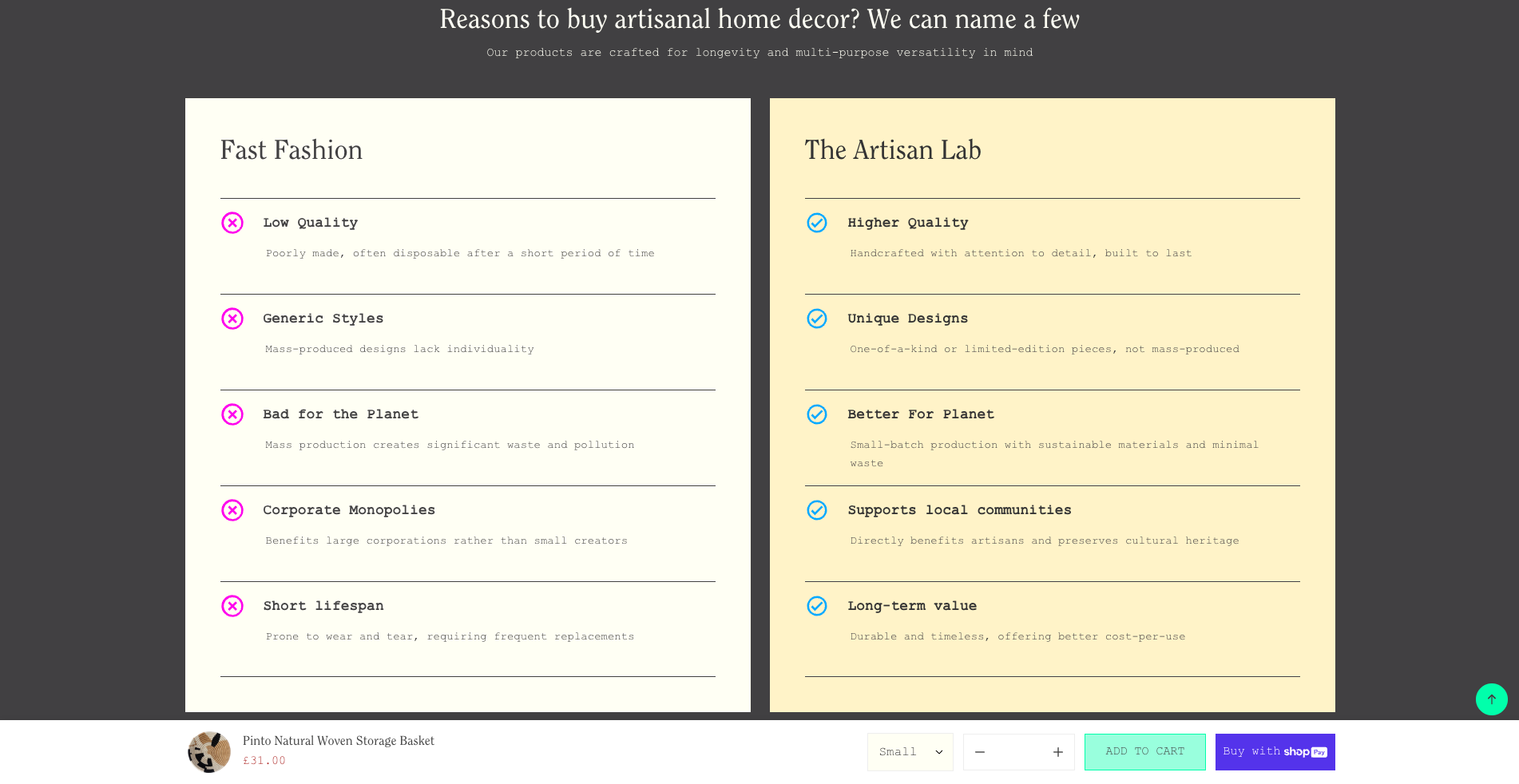
You don’t need a paragraph on your product page, a powerful sentence that lands is all. With our client - The Artisan Lab, we created a section with a comparison between fast fashion alternatives and their home decor. You can take a look at their product pages for an example - and while you’re there, have a browse!
You find a differentiating factor from your competitors
Here are some quick fire ways to sharpen your positioning when customers will be comparing you to other options on the market.
1. Sell the outcome, not the feature
People don’t want soap bars, they want soft skin that hasn’t been stripped of natural oils.
They don’t want oat milk, they want a flat white that doesn’t ruin their gut health and give them indigestion.
2. Name the problem before you sell the solution
If your product solves a known frustration, say it.
“Most sports bras don’t support you properly. Ours does.”
“Every refill brand we tried was leaky or ugly, so we built a better one.”
3. Reframe the trade-off
You want you customers to feel clever, and not guilty. Instead of “pay more to do the right thing,” make it:
“Invest once, save long-term.”
“Looks better, feels better, lasts longer.
4. Back It Up With Proof
Use reviews that echo your positioning.
→ “I’ve never had leggings that stay up like this.”
→ “I genuinely noticed a difference in my skin.”
Press quotes, founder stories, social proof, bring it in early and not hidden below the fold.
So if you’re building a sustainable brand, here’s your reminder:
Sustainability is not a positioning. It’s a value filter. It matters deeply to the right people of course. But it’s not a substitute for product-market fit.
People need to want what you sell. And most importantly they need to value the price you’re selling it all.
So if you're not getting the traction you expected, ask yourself:
Does my homepage tell people why they should care in under 5 seconds?
Are my product pages doing the job of a persuasive sales assistant?
Am I selling the benefits or listing the features?
Would a stranger understand the value in 10 seconds or less?
If not, you’ve not got a sales problem. It’s a positioning one.
Need help?
If this hits a little too close to home, you’re not alone. Most of our best clients started right here, frustrated that the mission wasn’t translating into sales. I can help you fix that.
If you want a second pair of eyes on your product storytelling, contact me to book a free website audit.
I’ll show you where customers are dropping off and how to turn interest into intent.